

Product overview
Product overview
Product overview
GateGuard is an AI-powered ANPR system that automates vehicle access control and logs entries with image evidence, ensuring secure and efficient gate management. It provides real-time recognition, data storage, and remote accessibility for seamless monitoring at entry points.
GateGuard is an AI-powered ANPR system that automates vehicle access control and logs entries with image evidence, ensuring secure and efficient gate management. It provides real-time recognition, data storage, and remote accessibility for seamless monitoring at entry points.
Project type:
Project type:
MMP @ Adagrad AI
MMP @ Adagrad AI
Duration:
Duration:
5 months
5 months
My Role:
My Role:
Product Designer
Product Designer
Responsibilities:
Responsibilities:
• Domain research
• Domain research
• User research
• User research
• Research analysis
• Research analysis
• Product management
• Product management
• UI Design & handoff
• UI Design & handoff
Opportunity discovery
Opportunity discovery
Opportunity discovery
The company had developed a highly accurate AI-powered ANPR system and began exploring where it could create real commercial value. The opportunity emerged at entry gates, where visitors were still being recorded manually in registers.During busy hours, queues grew, records became inconsistent, and security teams struggled to manage traffic efficiently. For large complexes, this also meant deploying more personnel and increasing operational costs.
ANPR offered a way to replace this slow, manual process with faster vehicle identification, accurate digital records, and more secure access.
The company had developed a highly accurate AI-powered ANPR system and began exploring where it could create real commercial value. The opportunity emerged at entry gates, where visitors were still being recorded manually in registers.During busy hours, queues grew, records became inconsistent, and security teams struggled to manage traffic efficiently. For large complexes, this also meant deploying more personnel and increasing operational costs.
ANPR offered a way to replace this slow, manual process with faster vehicle identification, accurate digital records, and more secure access.
From validation to a market-ready product
From validation to a market-ready product
From validation to a market-ready product
To transform the ANPR technology into a market-ready access management product through research, validation, and iterative development.
To transform the ANPR technology into a market-ready access management product through research, validation, and iterative development.
Planned product journey
Planned product journey
Planned product journey
Research — Understand the opportunity
Identify user needs, operational challenges, and suitable use cases for ANPR.
MVP — Validate the solution
Test the core experience with essential vehicle monitoring and access-control features.
MMP — Prepare for the market
Develop a complete, reliable solution that could be deployed and deliver value in real environments.
Research — Understand the opportunity
Identify user needs, operational challenges, and suitable use cases for ANPR.
MVP — Validate the solution
Test the core experience with essential vehicle monitoring and access-control features.
MMP — Prepare for the market
Develop a complete, reliable solution that could be deployed and deliver value in real environments.
A peek into out project timeline
A peek into out project timeline

From field research to MVP scope
From field research to MVP scope
From field research to MVP scope
Observations revealed what happened at the gate, while interviews explained why. Together, they helped us identify the smallest workflow worth validating in our MVP.
Observations revealed what happened at the gate, while interviews explained why. Together, they helped us identify the smallest workflow worth validating in our MVP.
What we observed:
What we observed:
What we observed:
Guards switched between the register, phone, and gate controls to process one visiting vehicle which took around a minute. In some cases, we noticed two guards, one for noting details and other for barrier/gate control.
During peak hours, some information was entered partially or added later to keep traffic moving.
Guards often relied on familiarity and memory to identify residents, regular visitors, or restricted vehicles.
Unrecognized vehicles required phone calls or additional verification before entry could be approved.
Finding a previous entry required manually searching through registers or going through camera recordings.
It was difficult to quickly confirm whether a vehicle was still inside the premises.
Guards switched between the register, phone, and gate controls to process one visiting vehicle which took around a minute. In some cases, we noticed two guards, one for noting details and other for barrier/gate control.
During peak hours, some information was entered partially or added later to keep traffic moving.
Guards often relied on familiarity and memory to identify residents, regular visitors, or restricted vehicles.
Unrecognized vehicles required phone calls or additional verification before entry could be approved.
Finding a previous entry required manually searching through registers or going through camera recordings.
It was difficult to quickly confirm whether a vehicle was still inside the premises.
What we heard:
What we heard:
What we heard:
Security staff needed essential vehicle information immediately, without navigating through multiple screens.
Number plates or visitor details were not always enough to management; they wanted vehicle images, timestamps, and entry details exactly.
Known vehicles should require less effort, and alerts on blacklisted vehicle detection.
Admins needed to search past entries quickly when investigating incidents or responding to queries.
Admins and security staff both wanted the system to identify vehicles automatically while keeping final control with security staff.
Security staff needed essential vehicle information immediately, without navigating through multiple screens.
Number plates or visitor details were not always enough to management; they wanted vehicle images, timestamps, and entry details exactly.
Known vehicles should require less effort, and alerts on blacklisted vehicle detection.
Admins needed to search past entries quickly when investigating incidents or responding to queries.
Admins and security staff both wanted the system to identify vehicles automatically while keeping final control with security staff.
How we validated:
How we validated:

Test MVP of the product on basis of wireframes.
Test MVP of the product on basis of wireframes.
The MVP validated the problem—but challenged our interaction model
The MVP validated the problem—but challenged our interaction model
The MVP validated the problem—but challenged our interaction model
Testing showed that a single desktop experience could not effectively serve both security guards and administrators. Guards had limited familiarity with mouse-based interaction and needed a more familiar way to operate the gates.
This insight led us to rethink the product rather than simply refine the existing screens.
Testing showed that a single desktop experience could not effectively serve both security guards and administrators. Guards had limited familiarity with mouse-based interaction and needed a more familiar way to operate the gates.
This insight led us to rethink the product rather than simply refine the existing screens.
The product pivot:
The product pivot:
The product pivot:
Mobile interface for security guards
A familiar, touch-based experience focused only on immediate gate operations
Mobile interface for security guards
A familiar, touch-based experience focused only on immediate gate operations
Web dashboard for administrators
A cleaner, information-rich interface for managing the wider system
Web dashboard for administrators
A cleaner, information-rich interface for managing the wider system
Other MVP learnings
Other MVP learnings
Other MVP learnings
Critical gate actions such as gate control needed to be touch-friendly and completed in minimal steps.
Critical gate actions such as gate control needed to be touch-friendly and completed in minimal steps.
The interface had to work with minimal training
The interface had to work with minimal training
Administrators needed to manage vehicle whitelists and blacklists while also importing existing records into the new system.
Administrators needed to manage vehicle whitelists and blacklists while also importing existing records into the new system.
Information architechture
Information architechture
Information architechture
Information architecture for administrators portal on the basis of most things required by admins.
Information architecture for administrators portal on the basis of most things required by admins.

Wireframes
Wireframes
Wireframes
Early layout explorations to define structure, user flow, and key interactions.
Early layout explorations to define structure, user flow, and key interactions.


Final Designs
Final Designs
Final Designs
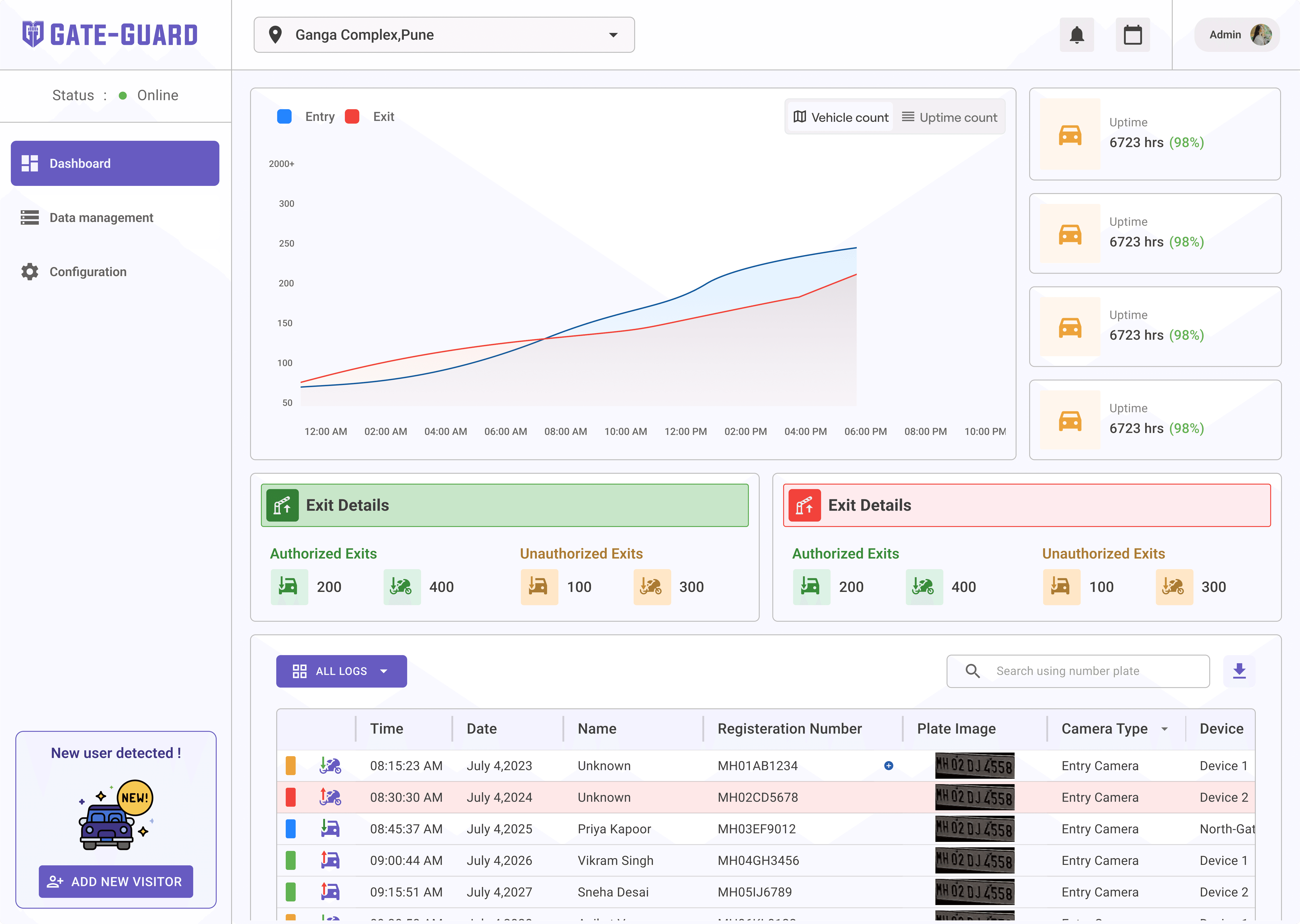
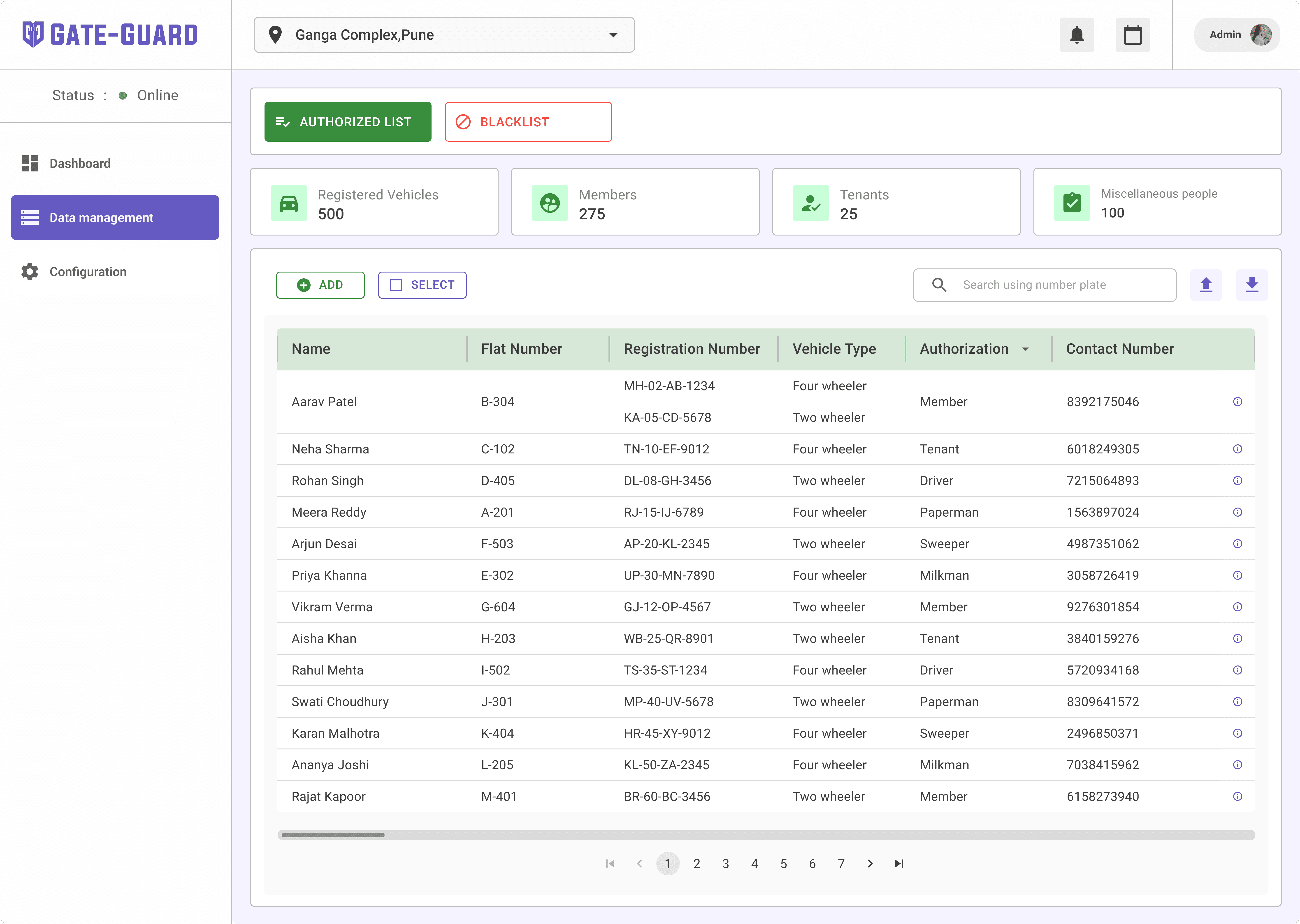
A few High-fidelity screens showing the final visual design and user experience.
A few High-fidelity screens showing the final visual design and user experience.




Related Projects
Related Projects


